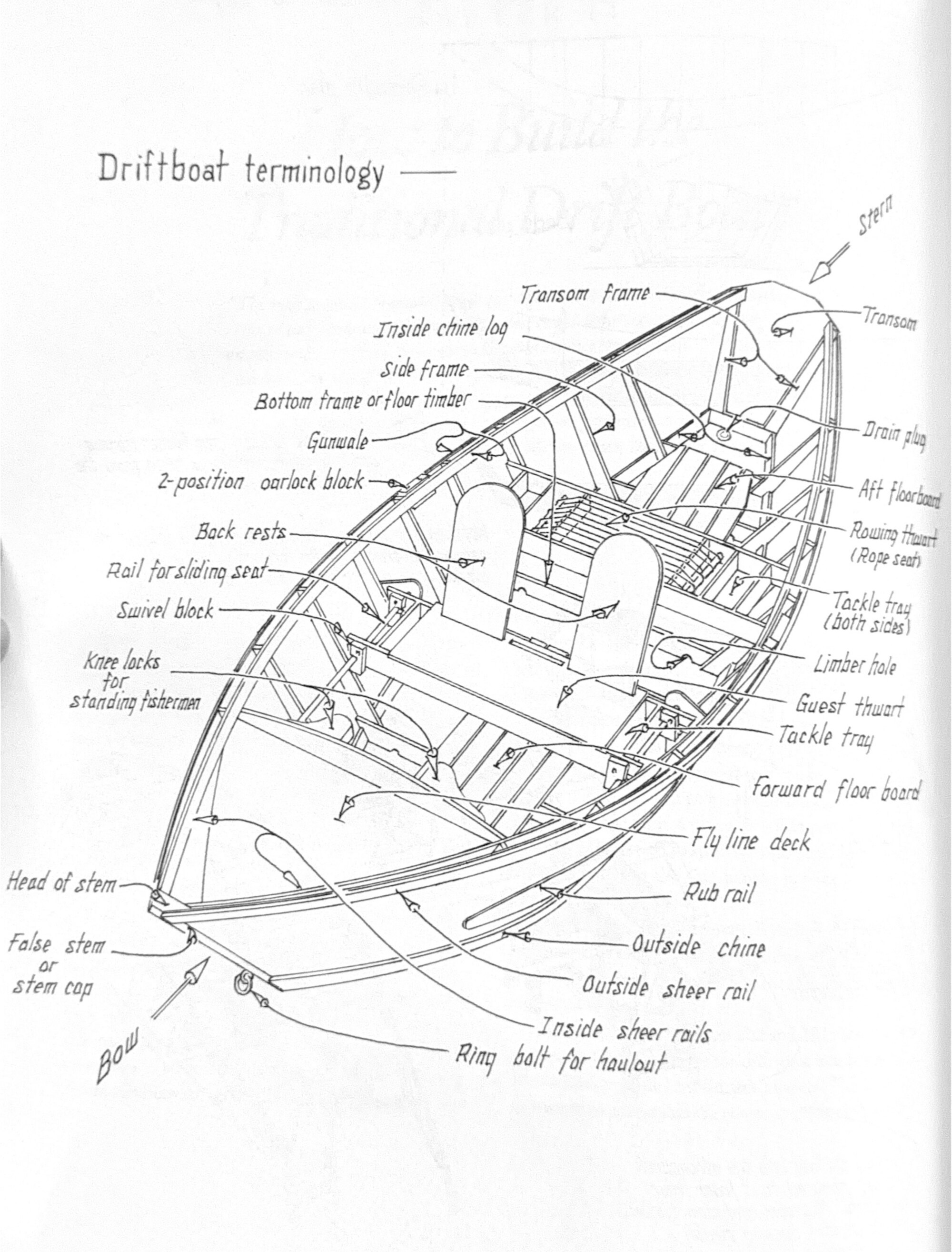
The parts, by name. From Fletcher, Drift Boats and River Dories.
We are building a boat in a desert. Woodie's Last Boat, a McKenzie River dory, the lineage that fathered the dories of the Grand Canyon: seventeen feet, flat-bottomed, sharp at both ends, plywood on frame, built with forty students in a Phoenix high school shop. This page is the record of the build, kept while it happens.
A Grand Canyon dory is high-sided, flared, and flat-bottomed with a long rocker, sharp at both ends. It rides over whitewater that a raft plows through, dry and quick and willing to be steered. Martin Litton brought these wooden boats to the Colorado in the 1960s and named each one for a place human hands had drowned or threatened, so the boats carried those names back down the river. In 1983, with the river in flood and the dam upstream near failure, Kenton Grua ran one the length of the canyon in thirty-seven hours. That boat was the Emerald Mile.
Ours is Woodie Hindman's last boat, measured at the Old McKenzie Fish Hatchery by Fretwater Boatworks. A dory is an argument about water in the desert, floating. That is why we build this one and not a canoe.
The parts, by name. From Fletcher, Drift Boats and River Dories.
The build begins on a screen. Fretwater's measured lines, rebuilt as a parametric model in Onshape: 153 features, 38 parts, every frame drawn as a floor and an upright off the same half-breadth planes the loft will use. The model settles arguments before wood does, frame heights, the chine notch, what the CNC cuts, and where the model and the full-size loft later disagree, the faired loft wins and the model is corrected to it.
The model is public. Turn the hull yourself.
The lofting tables take the grid: a centerline, a baseline, ten stations.
Lofting is the old practice of drawing a boat at full size before you cut a single board. The name comes from the lofts of old shipyards, the only floors with enough clear space to chalk out a hull at one to one. A designer's drawing is small, and the boat's shape arrives as a table of offsets: heights and widths at each station, written to the nearest eighth of an inch. Scale those numbers up and a small error in the table becomes a visible bump in a hull you have already paid for. Drawn full size, where the eye and a springy strip of wood can read it, the error has nowhere to hide.
You plot the points, then spring a batten through them, a thin clear strip of wood held down by lead weights. Wood can only bend in a fair curve. Where a bad point shoves the batten off that curve, you believe the wood and correct the number. Letting the material find the line the boat actually wants is the whole craft.
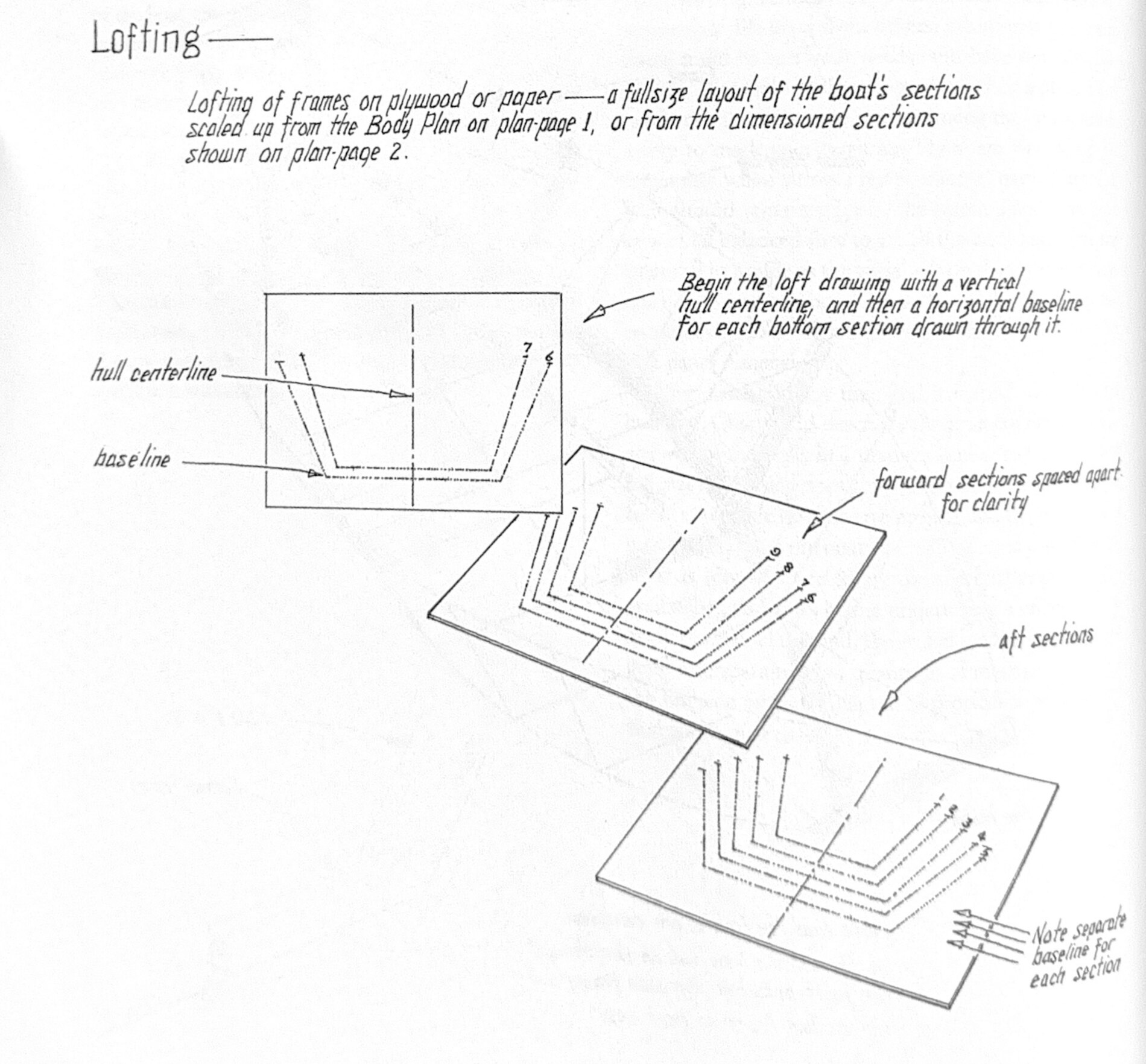
Lofting the sections full size. Fletcher.
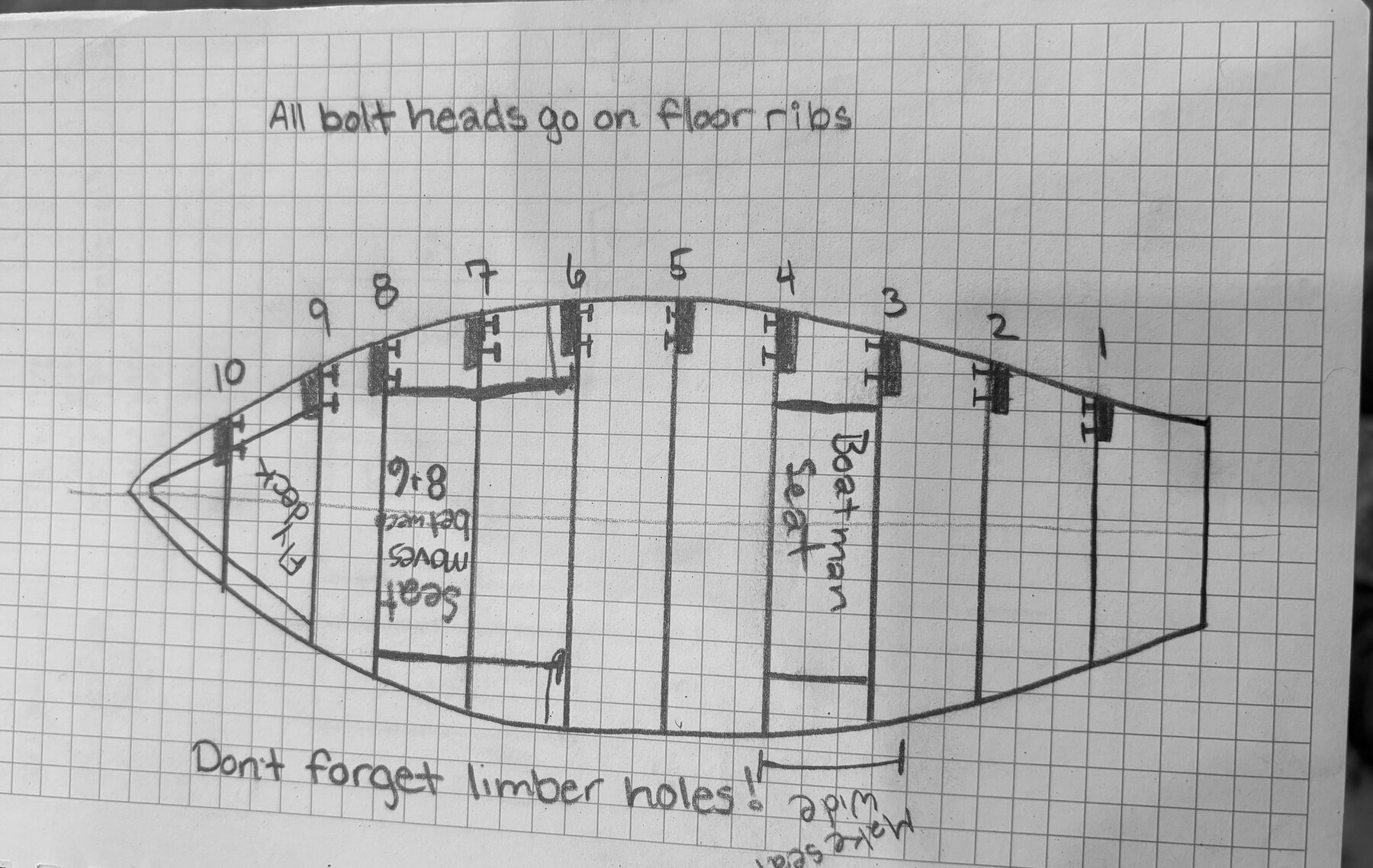
The rib plan, ribs 0 through 9, transom to stem. The loft is the master.
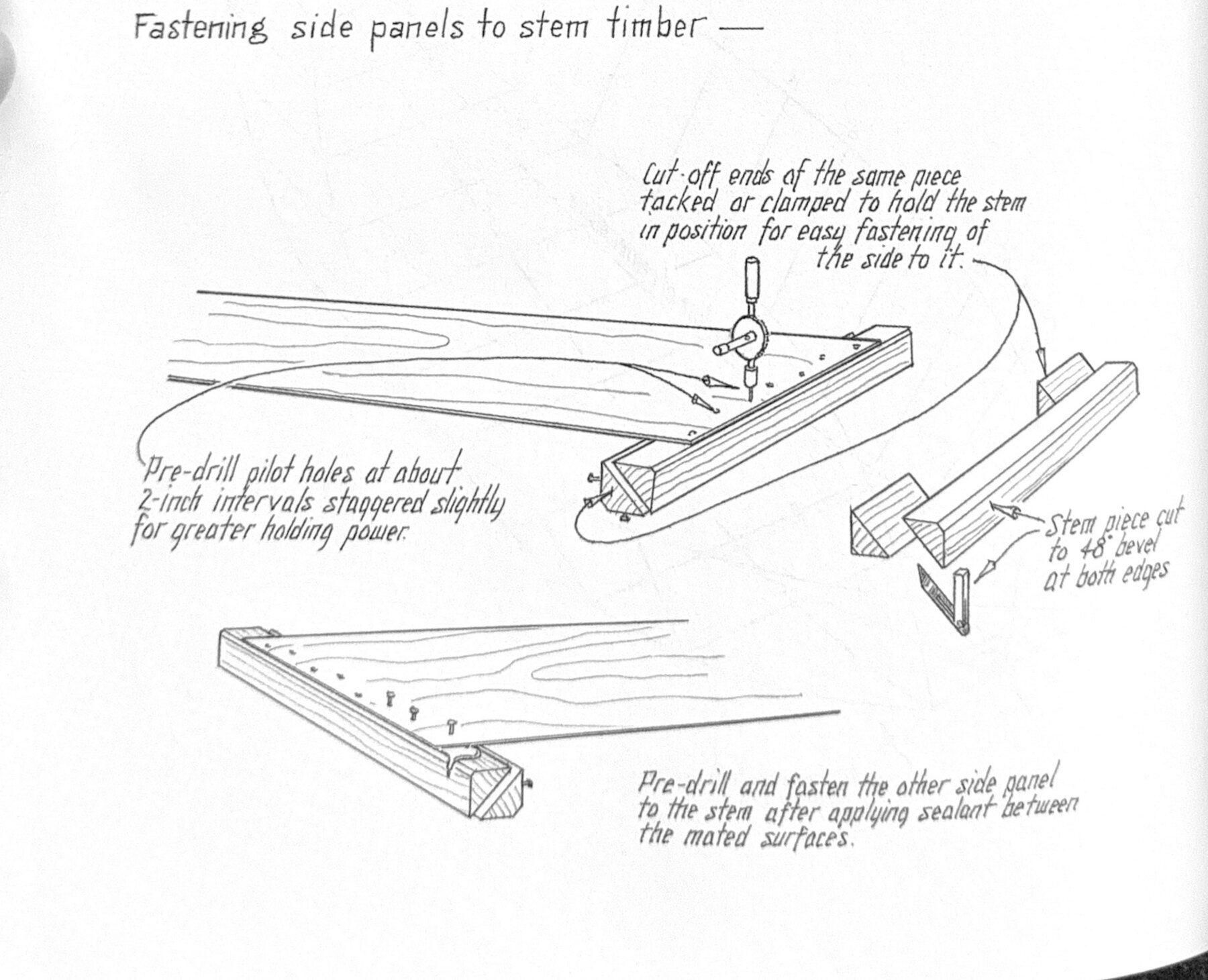
Hanging the sides on the stem.
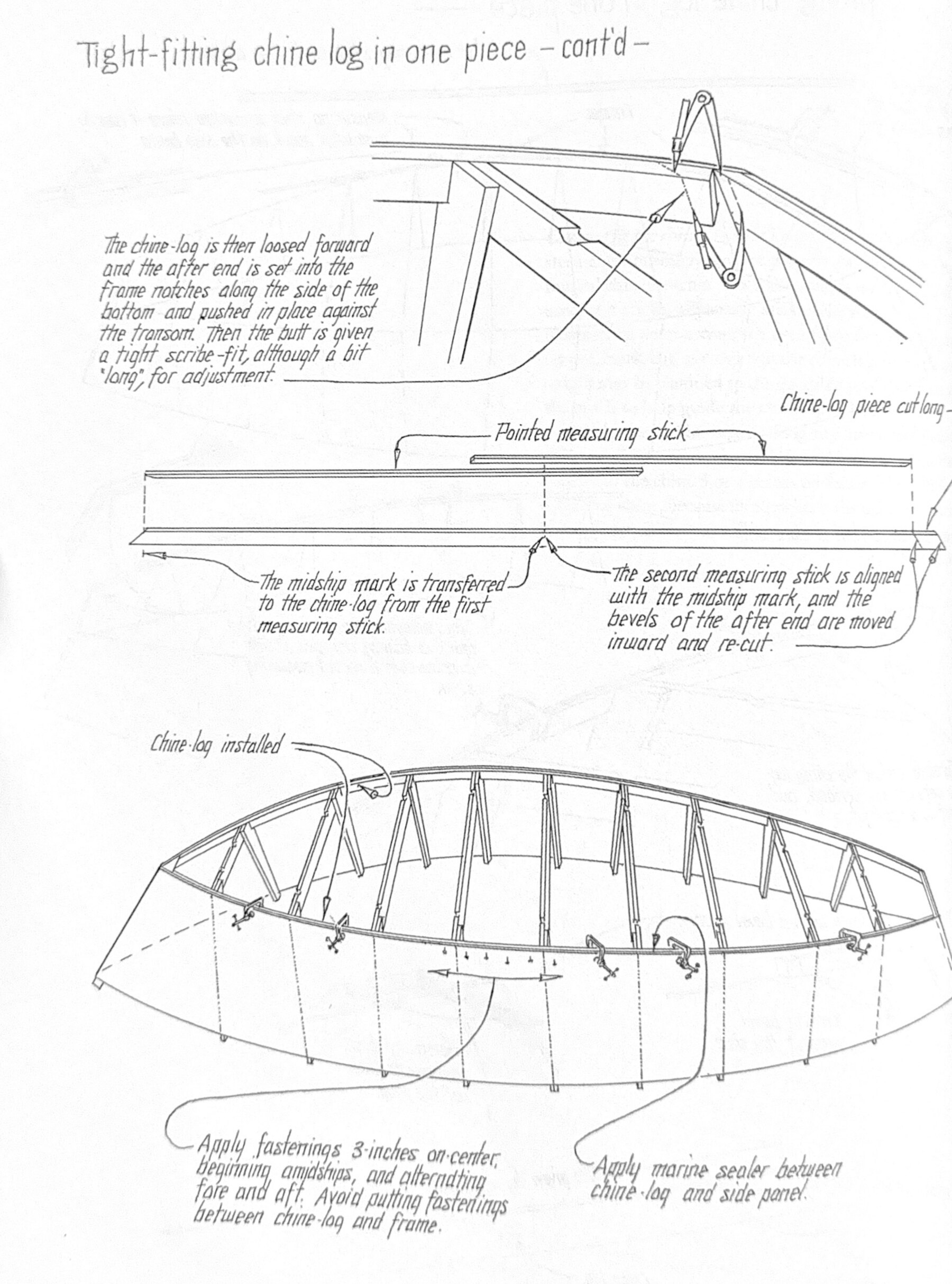
The chine, scarfed, bent in cold, scribed until it touches everywhere.
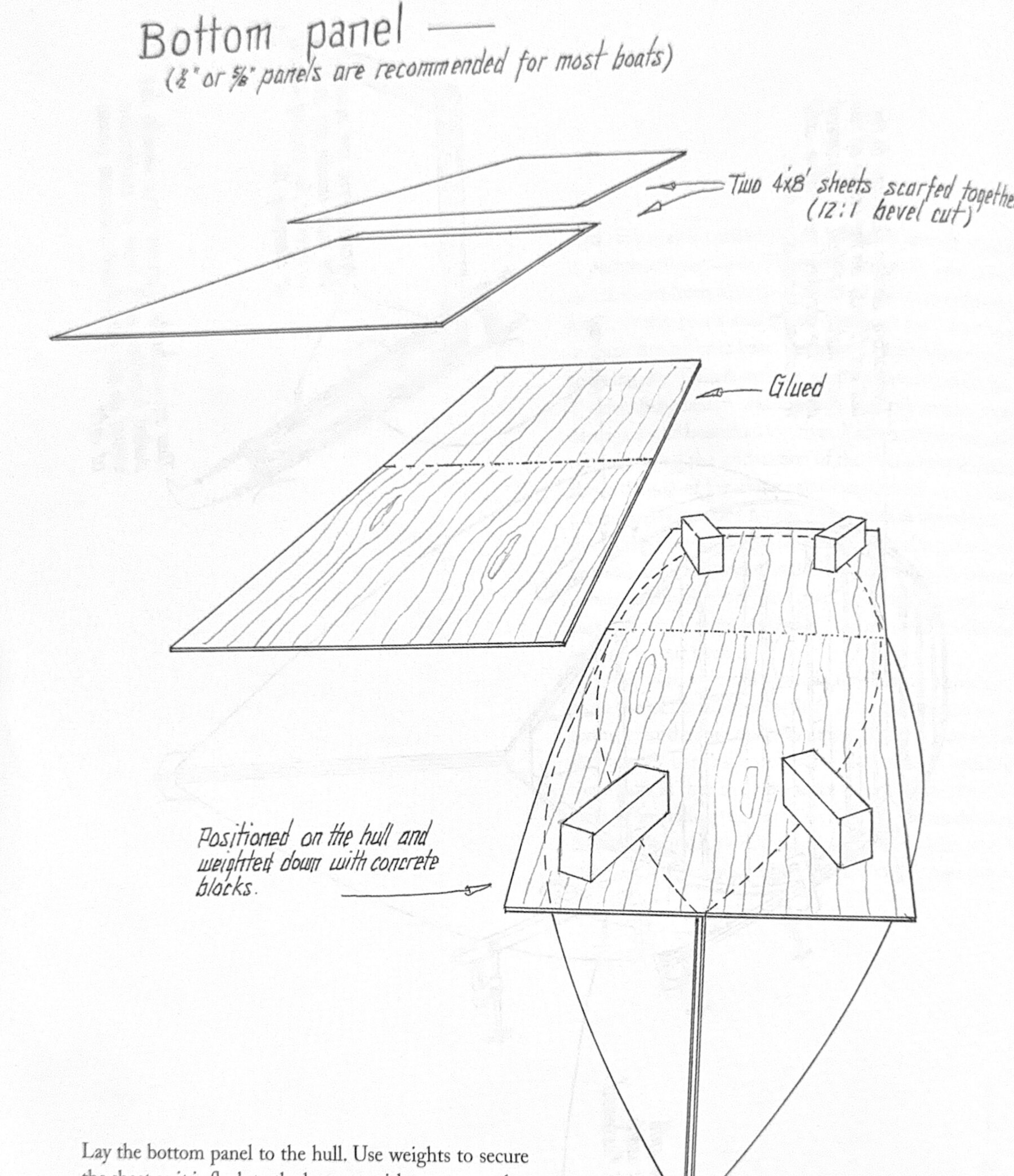
The bottom on, oversize, trimmed to the real hull.
Forty hands cannot all be on one seventeen-foot boat at once. So every group also builds the whole dory at one twelfth scale: same offsets, same loft, same strongback, same planking order, chipboard and foamcore standing in for plywood and fir, an X-acto standing in for the saw. You learn the boat by building a boat.
Each group names its model in Litton's tradition, for a desert-water place that has been lost or is under threat, and chalks the name on the class board beside the boat we are building full size.
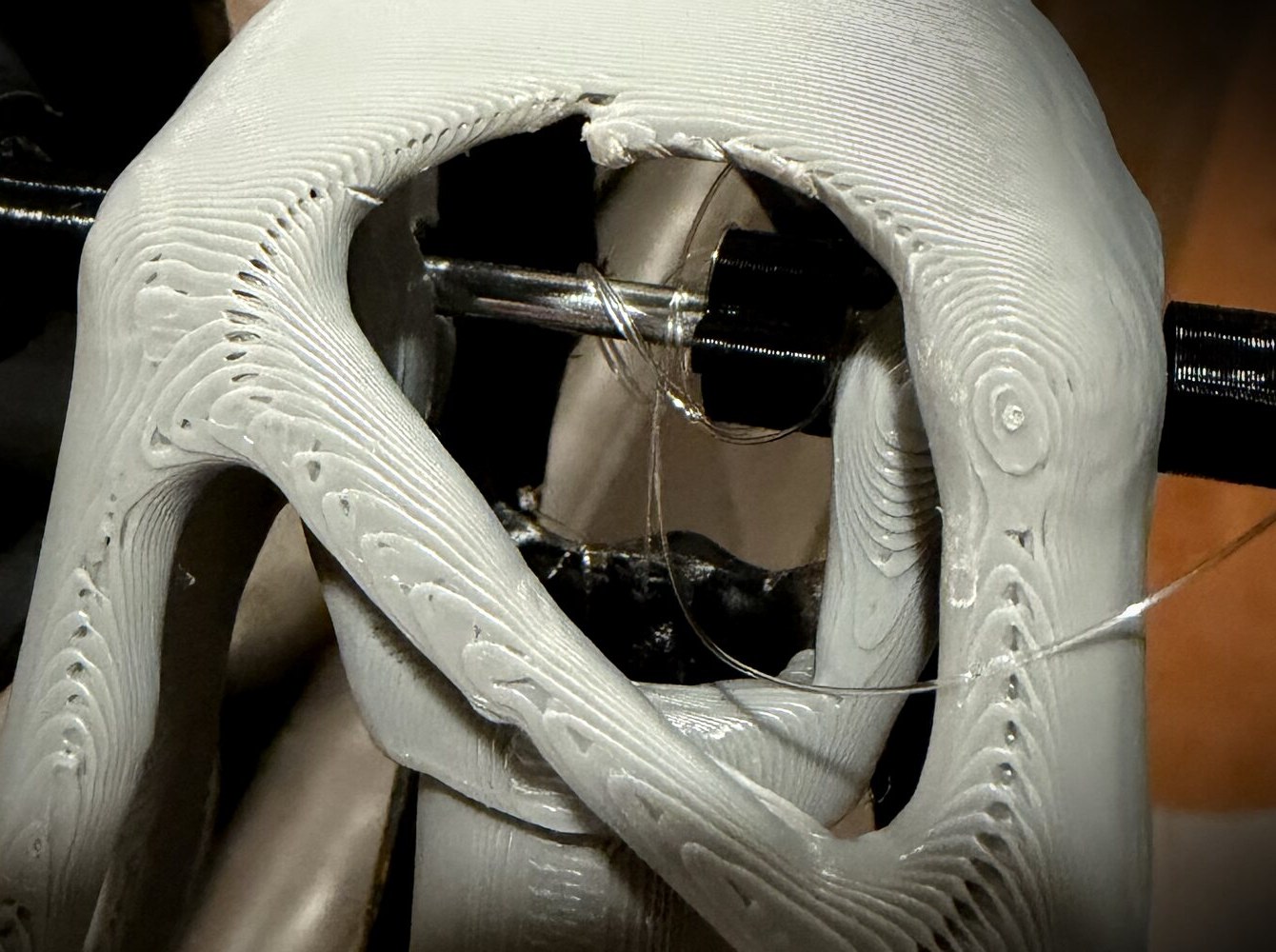
Twenty-four turns of the axle should have rolled it 5.7 meters. At most 16% reached the road. The set screws never held the hubs or the drive peg on a polished 3 mm rod, so the axle spun inside its own wheels. The whole build, the physics and the failure are at togoat.aaand.space.
Then it went on the ground. Wound by hand and set down on the street, it went somewhere between zero and three feet.
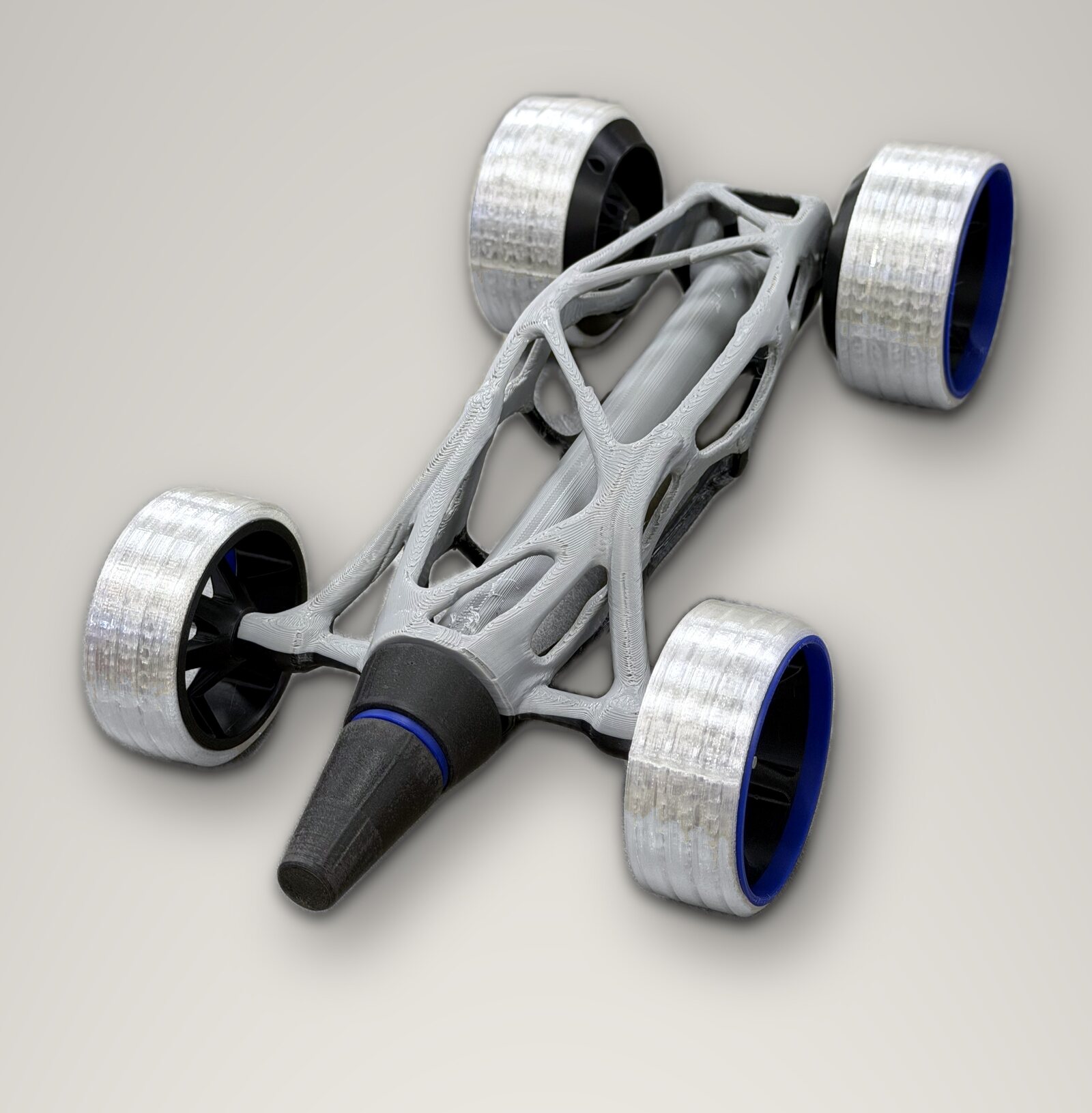
Built by Thursday evening. Spun by hand with the wheels in the air, everything turned.
Every part, registered. The build book walks twelve steps in this order.
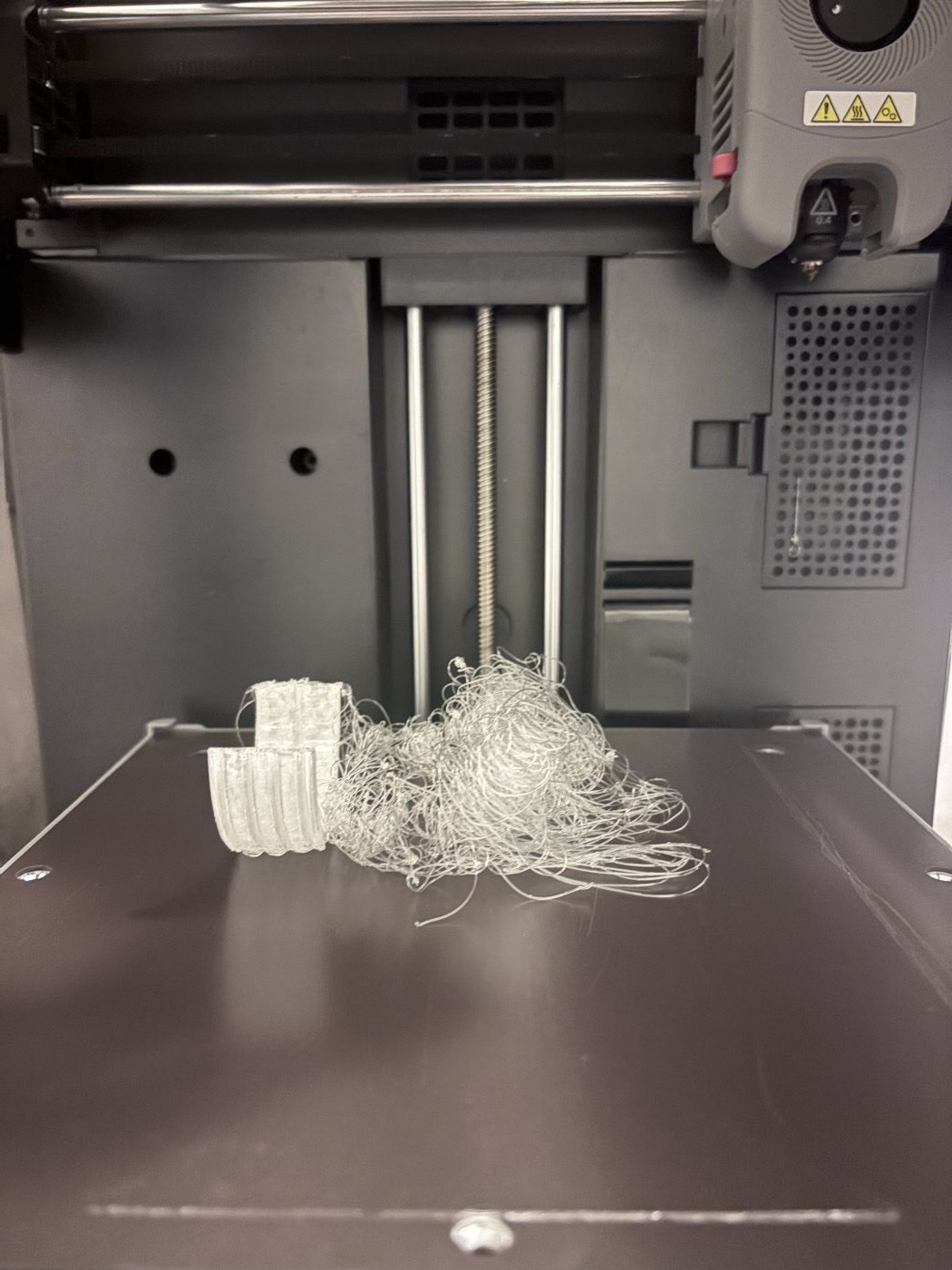
Two days of printing on whichever machine was free. The dissolvable-support printer had an empty bath, so the chassis moved to PLA. Most print decisions were made by what broke.
The band hides in the spine and pulls through a 2:1 pulley, so the axle feels half the pull over twice the string. Grip sets the limit, and this keeps the launch under it.
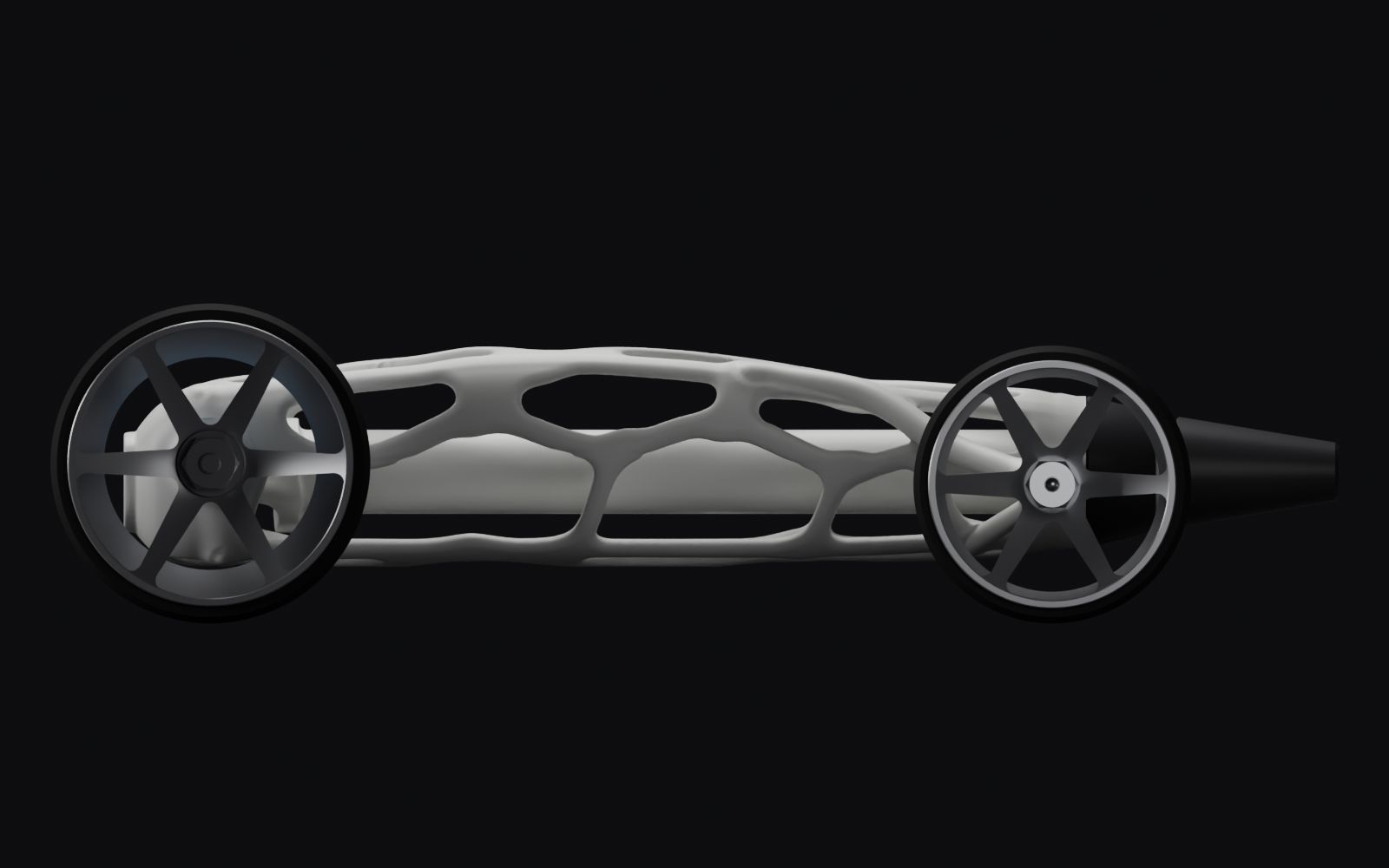
v3 started from the silhouette: an F1 stance, a torpedo in profile, a waist and a swell in plan. The mechanics had to fit inside the outline.
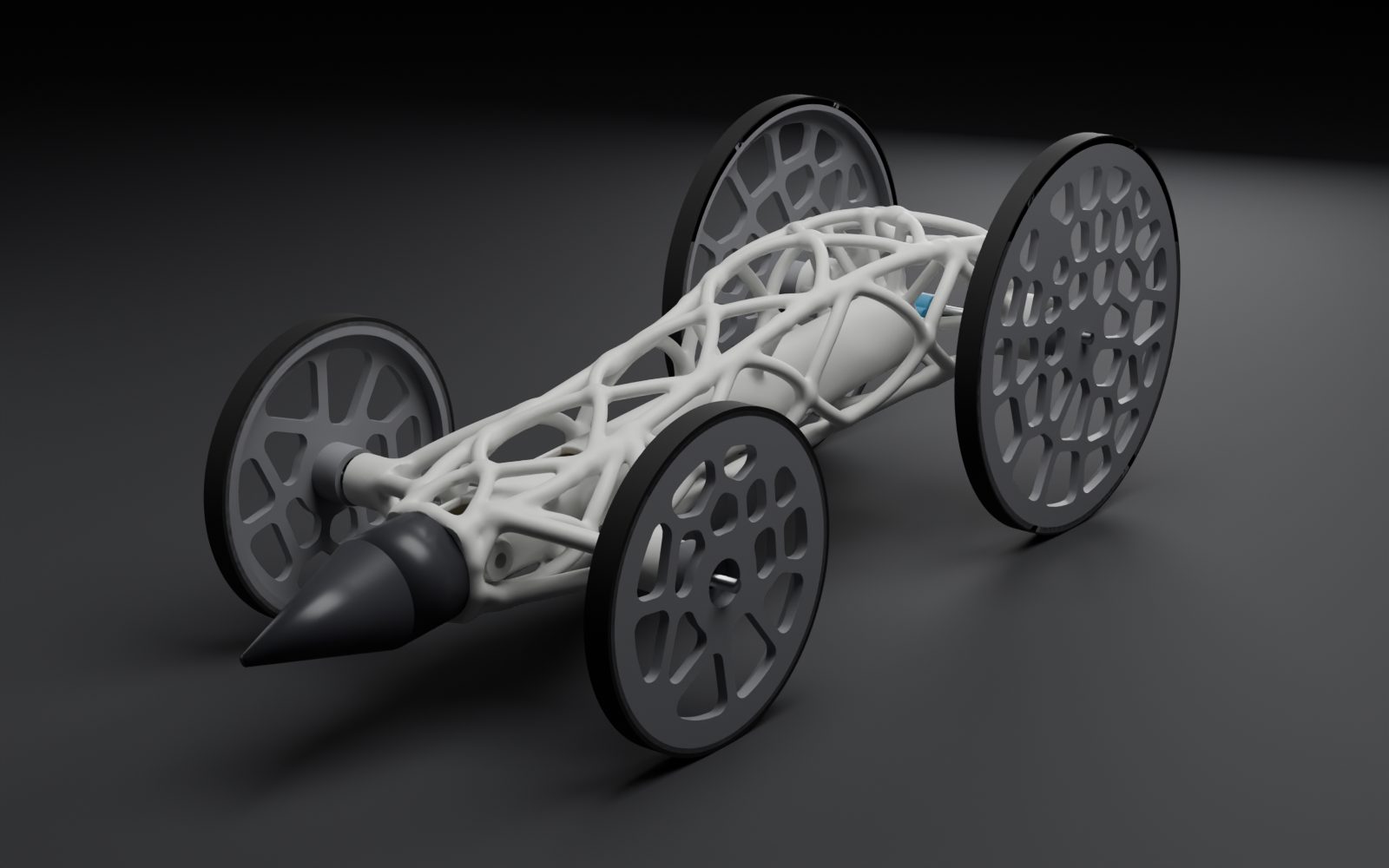
v2 fixed every v1 finding, then lost the side-by-side with the car it was copying. It looked like a carrot on wheels of swiss cheese. It was drawn from the drivetrain outward, and the shape came last.
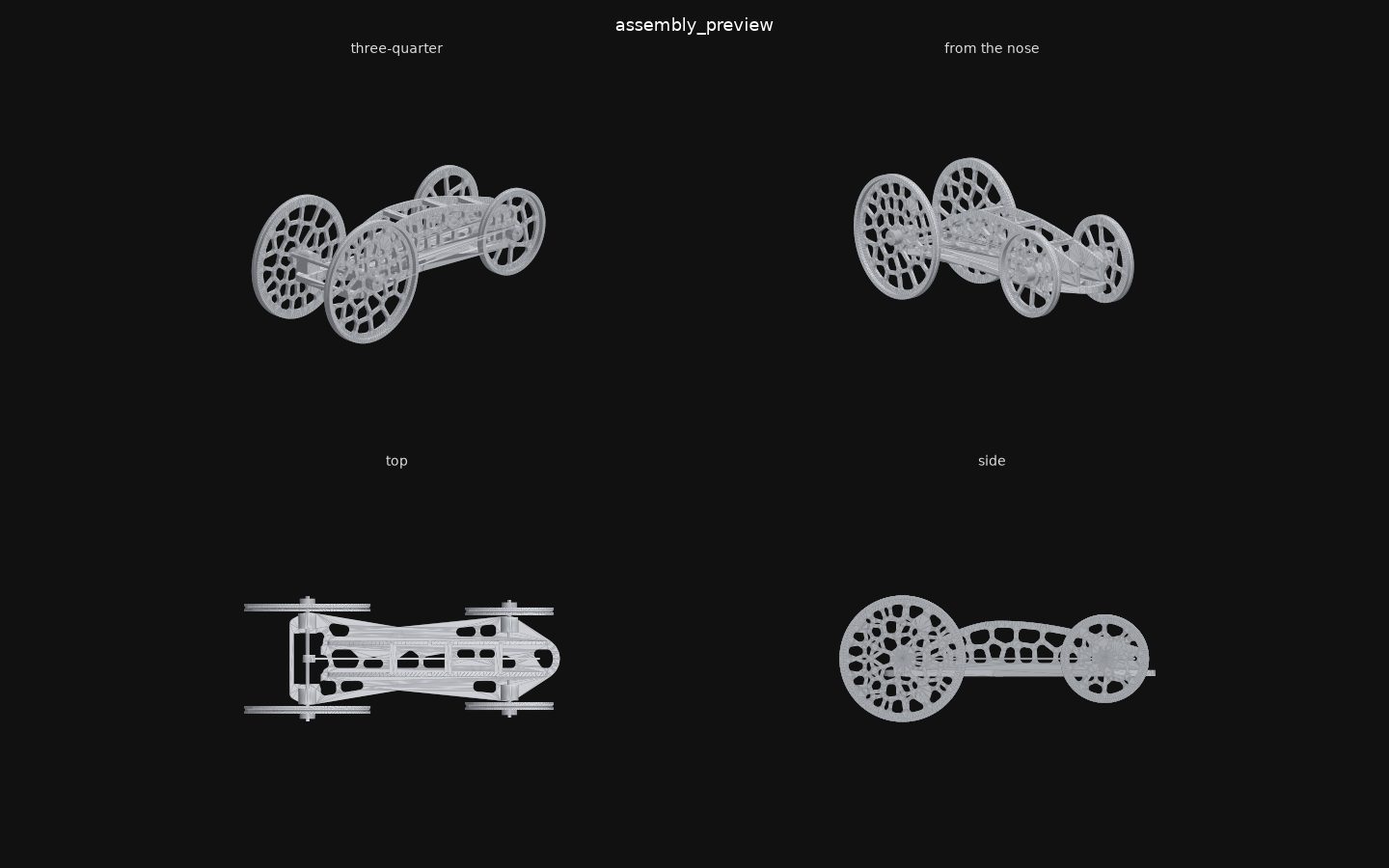
A rubber-band car for a physics brief: five meters minimum, the longest run wins. Earnie picked the reference, the Cirin, and directed the design through Claude. v1 was a flat lattice. Four reviews found its winding hook hit the deck on all 57 positions checked, so the axle could never turn a full circle.
| 01 | dory | 7 plates · june 2026 |
| 02 | grow-lab | 3 plates · 2026-09-04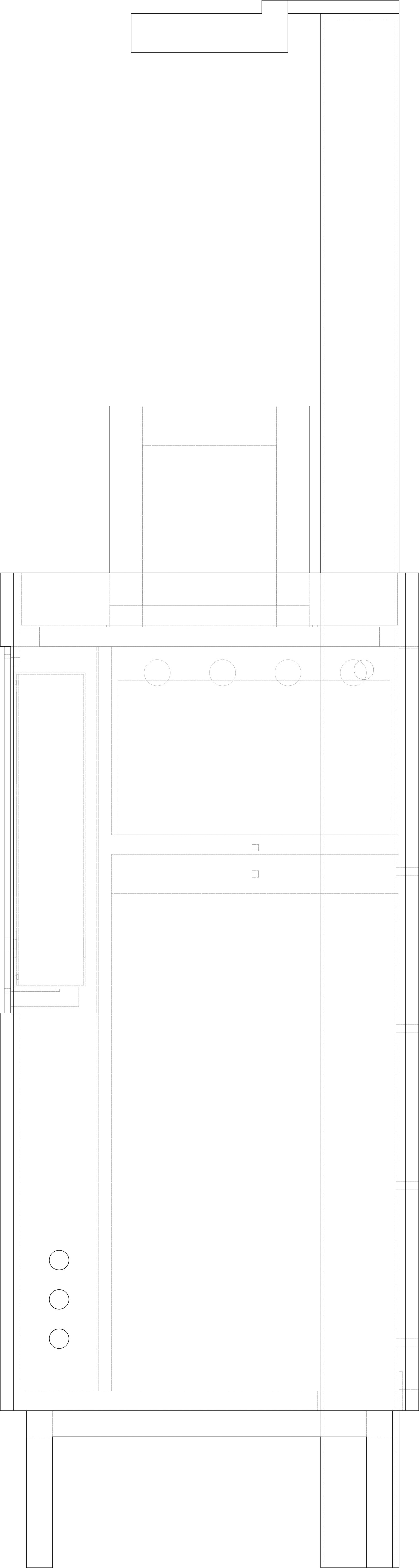 |
| 03 | workbench | 9 plates · 2026-09-23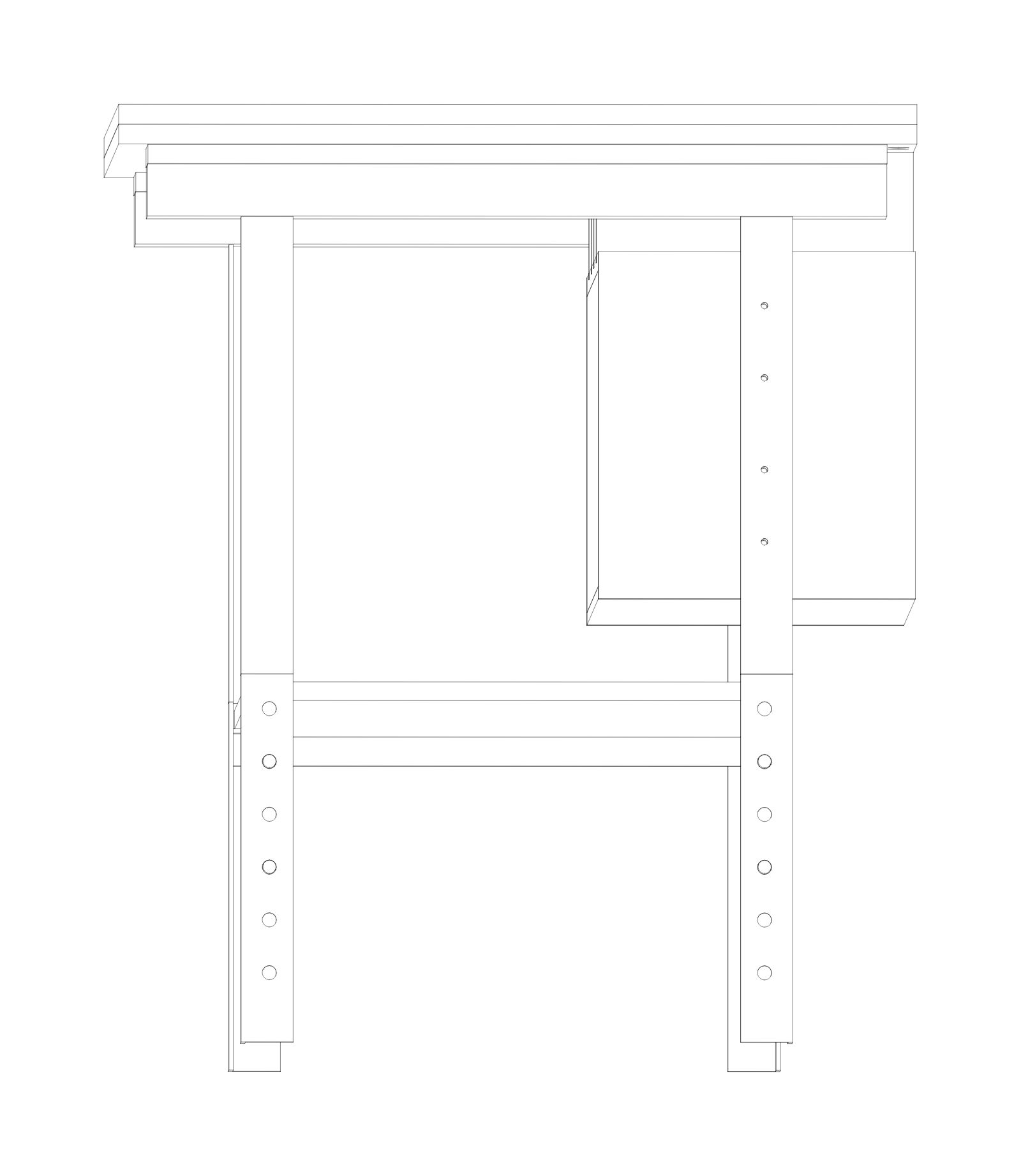 |
| 04 | cnc-station | 3 plates · 2026-09-19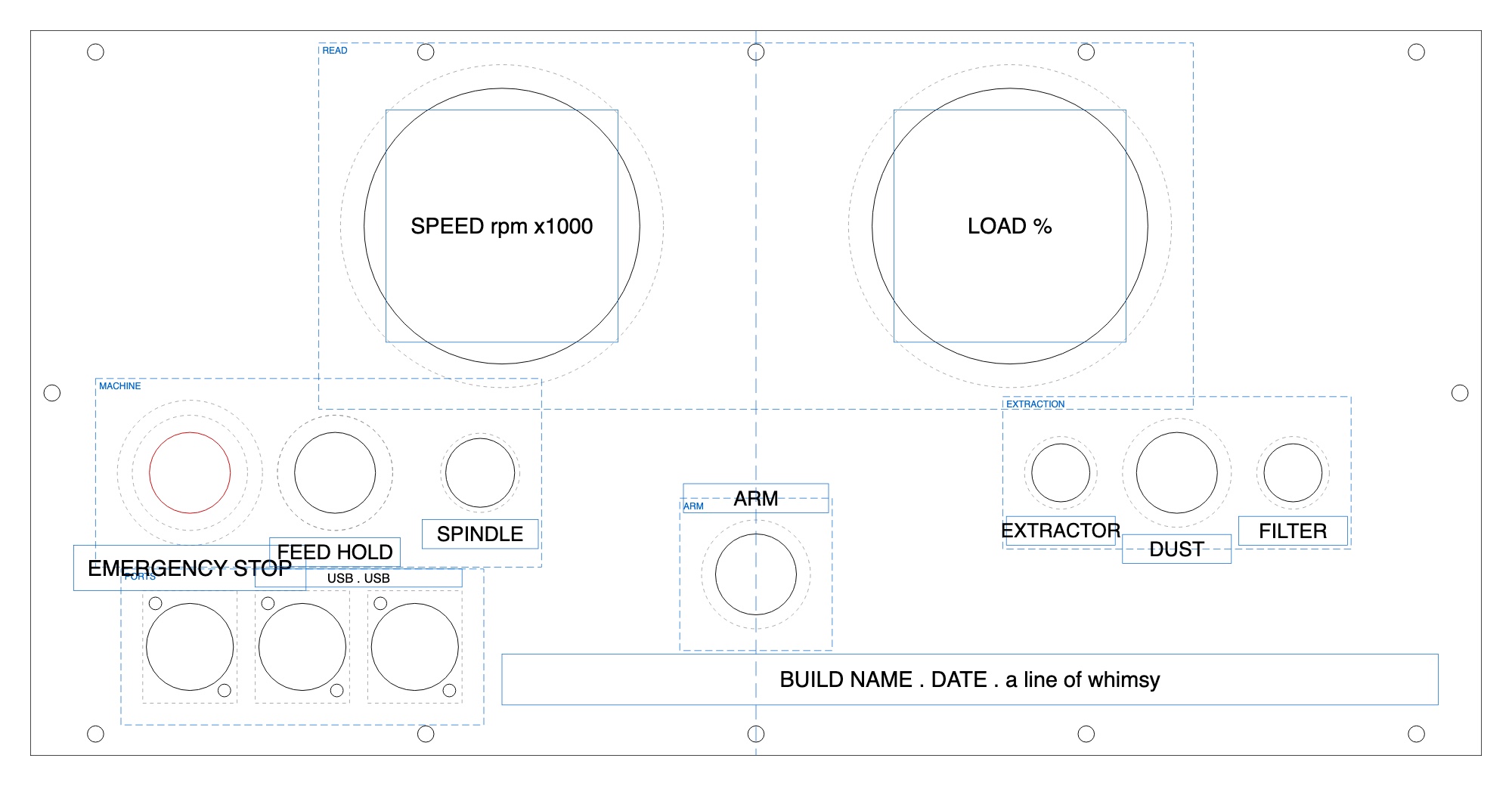 |
| 05 | togoat | 9 plates · 2026-10-02 |
this scroll accumulates · entries are added while the work is kept · aaand.space 2026